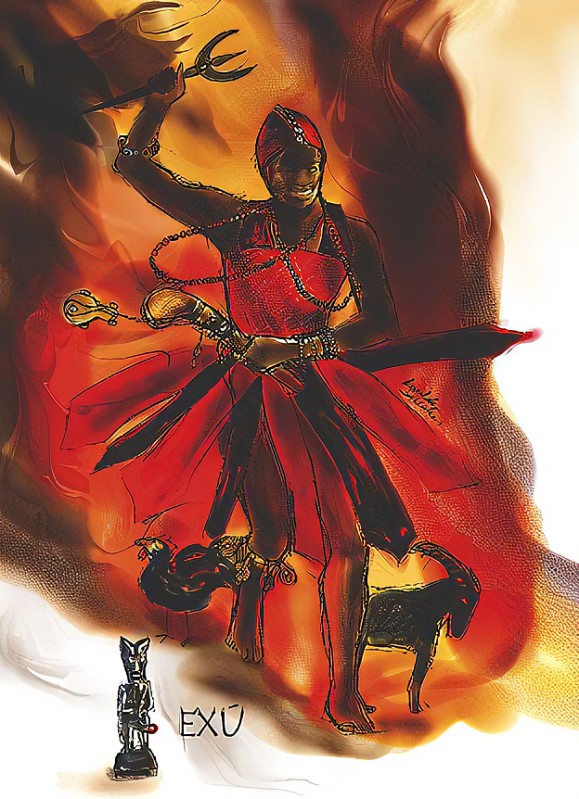
This post has been a long time coming, especially since the rising popularity of Papa Legba within the Hoodoo community. I wanted to clarify a few things because this has become a hot topic among the African Diasporic community.
First of all, Papa Legba within the Haitian Vodou, 21 Divisions, New Orleans Voodoo and Sanse traditions is NOT the same as Eshu, also known as Elegua or Elegba, within the Ifa, Isese, Lukumi and Santeria communities.
You will commonly see Legba being compared to Eshu, especially in social media and online articles about the ATR1 diaspora in general, naming this archetype “Legba/Eshu.” This implies that these spirits are either one in the same, or interchangeable in some way. Although they are not the same deity, they do fall under the category of Transitional Spirits. As such, they are able to walk in between two worlds. With Legba, it is between Ginea and the Human World and with Eshu, it is between the Orisha, or Natural Forces and Humanity. Both of these Spirits are seen as Messengers and are commonly referred to as ‘tricksters.’
Eshu within the Yoruba traditions
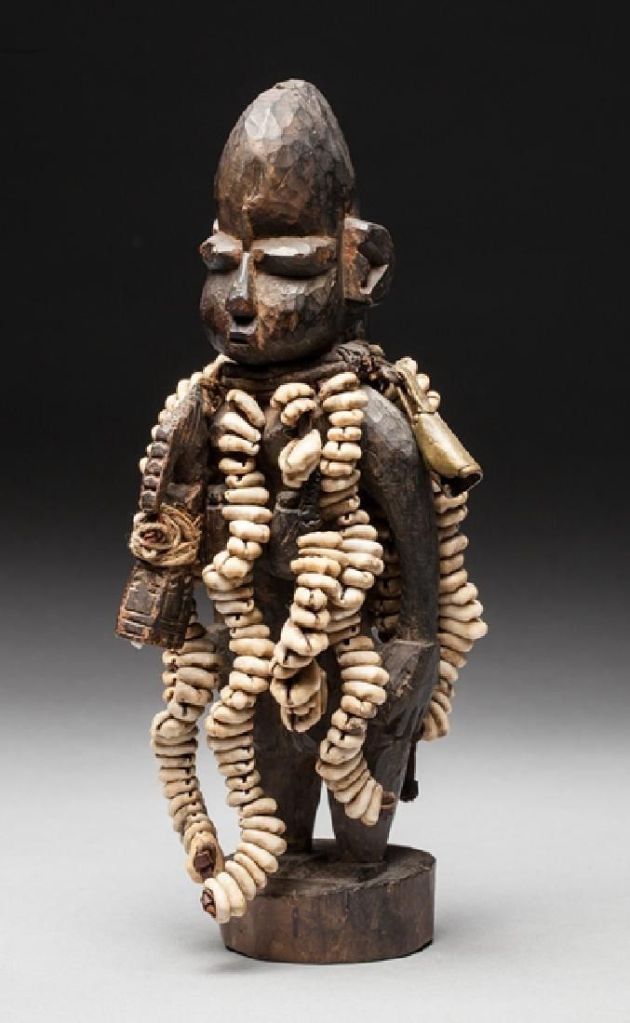
Eshu is the guardian of the crossroads. I think that the main reason he is compared to Legba within Haitian Vodou is because he is one of the first spirits that is honored within Yoruba practices. A lot of practitioners that get their Hand in Ifa, also receive an Eshu idol. This is not always done in the African traditions, it is based upon your specific needs within your spiritual court. However, within the Caribbean traditions, he is one of the warriors that is received when you get your Hand of Ifa. All in all, the root of the tradition is the same, but there are subtle differences in the Caribbean traditions based on what was needed after the journey to the Americas.
Eshu is associated with the colors red and black. He has 21 different aspects, and is sometimes depicted as a child. He is also known as a trickster. This is not so much because he likes to pull pranks on people for the sake of capriciousness. But he literally lives on roads, at crossroads and within neighborhoods. This is why he is kept close to the door. He likes to be outside and placing him in the middle of one’s home can entice him to cause mischief within the house. He is ever watchful and knows who is practicing malicious magic. He likes to wait, watch and take notes of people’s wrongdoings and create blockages. Within the Yoruba traditions, it is wise to stay within good character as to not cause any disturbances with Eshu and ultimately one’s destiny. He is an important orisha and it is wise to stay on Eshu’s good side. When you are within Eshu’s good graces, he will tell you who your enemies are, when you need a limpia and warn you of any impeding problems.
Legba within Haitian Vodou
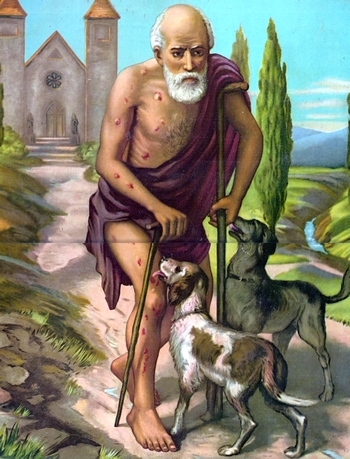
Legba is the guardian of doorways. This includes all doorways, specifically the doorway to Ginea, the realm in which the lwa reside. He can open the door so that you may access the other lwa. However, he also governs the magic of closing and opening doorways. He also oversees the concept of time.
Legba himself is an old man, hunched over and needs to walk with a cane. His possessions are extremely rare, but if you get a chance to meet him, he either has people helping him walk or he sits in a chair and servitors approach him respectfully. He is filled with wisdom and knowledge. Any message he willingly gives is a blessing.
Legba’s colors can vary. In Haiti, it can range from brown, purple and yellow. He is not associated with Black and Red. There may be some houses in New Orleans that do this, but it is not traditional. I think that this is where a lot of confusion lies. It is his brother, Met Kalfou that takes the colors red and black.
After God, Legba is the first spirit to be saluted. At the start of all ceremonies, the doorways are acknowledged with water, a candle and libations. This is done out of respect for Legba and allows other lwa to pass through the gate into our realm.
Who is associated with Who?
A general rule of thumb is to keep the two traditions separate. I do believe that the realm of Ginea and the realm of Yoruba are close together, similar to neighboring countries within the Spirit realm. I think that the reason these need to be kept separate is because there is too much misinformation on the internet. There is a good chance that one can think something is an Eshu or a Legba, when in reality, it is something much darker coming to claim the offerings, light and whatever else is on the altar. This is why it is wise to seek a mentor that knows how to work with the spirit and can guide you. There are many books out there, but a lot of them contain information that can hurt more than they can help.
How did Legba become so popular in Hoodoo?

The practice of Hoodoo is a system of folk magic from the South that combines African, Native American and European practices. It is not a religion. That being said, working with Legba is not a traditional thing within its practice. In Hoodoo, people normally work with the Bible and their personal guides and ancestors.
However, if one wants to start practicing a Vodou tradition, it is recommended to start with Legba, Danballah or Ghede. Normally, it is Danballah that calls people to the practice. But being that Legba is the guardian of the door to Ginea, he is a decent place to start. However, this is not just a system of magic, but a religion. You don’t really have the authority to pick and choose what spirit to work with. If the lwa see that you are working with one spirit, others may approach you too. Vodou is a way of life. It should not be played with or used at one’s leisure. It’s something to think about because ultimately, it is a commitment.
- African Traditional Religion ↩︎
 Spiritual Folktails
Leave a comment